
Openness, collaboration, and Europe’s innovation challenge
Lessons from Michiel Scheffer’s Keynote
by Christoph Grimpe, 16/05/2026
At the Open Innovation in Science Conference, the keynote by Michiel Scheffer, President of the Board of the European Innovation Council, offered a timely reminder that science-policy relations are not only about translating research into action, but about designing the conditions under which collaboration can happen at all. Speaking to the conference theme, “Science-Policy Relations: What is the Role of Openness and Collaboration,” Scheffer argued that the answer depends on how we define collaboration, how we organize it, and how we support it across regions, sectors, and institutions.
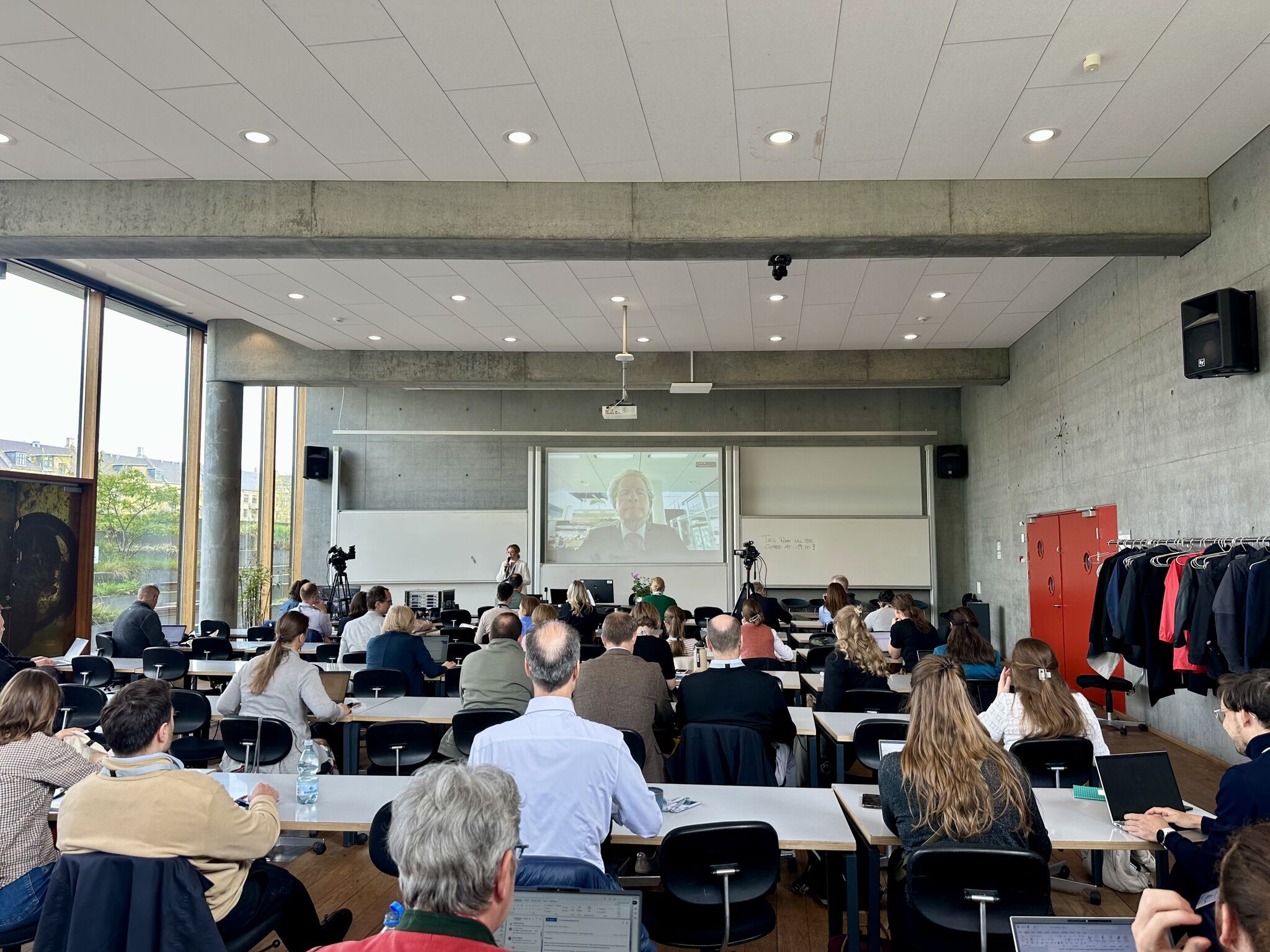
A central thread in his keynote was that collaboration is often treated too loosely. Not every interaction, contract, or market exchange is collaboration. For Scheffer, collaboration sits somewhere between market transactions and ownership: it is neither purely transactional nor fully integrated. That distinction matters for policy, because science-policy collaboration can be formal and institutionalized, or implicit and embedded in broader systems of exchange. In practice, both matter. Researchers and policymakers do not collaborate effectively simply because they share a common goal; they need structures, incentives, and spaces that make collaboration possible.
Scheffer used the European Innovation Council as a concrete example of how policy can shape these conditions. The EIC was created to help Europe overcome the “valley of death” between research and innovation, particularly the challenge of turning excellent science into entrepreneurial scale-ups. In his view, this is not just a funding problem. It is also a coordination problem. Europe’s innovation landscape remains fragmented across countries, regions, and sectors, and this fragmentation makes it harder to build the critical mass needed to compete globally.
This is where openness becomes strategically important. Scheffer emphasized that European instruments often contain implicit forms of openness: consortia spanning several member states, links between companies and investors, and requirements that encourage teams to connect with clients, suppliers, and other partners. These mechanisms do not force collaboration for its own sake. Rather, they create incentives for actors to open up their work, align around shared goals, and build the relationships that turn isolated excellence into collective capability.
At the same time, Scheffer warned that openness must be balanced with realism. Europe does not benefit from openness in the abstract; it benefits when openness helps build stronger value chains, broader ecosystems, and more effective pathways from science to market. In that sense, collaboration is not simply a moral good. It is a condition for scale, resilience, and strategic autonomy. Whether the topic is semiconductors, quantum technologies, or defense, Europe’s ability to act depends on its capacity to connect specialized hubs and coordinate across borders.
The Q&A brought out another important dimension of the keynote: collaboration between science and policy is not one-way. Scheffer described how policy is informed by academic research, expert boards, tendered studies, and ongoing engagement with scientific communities. He also stressed the importance of travel, dialogue, and direct exposure to local innovation environments. Policy, in his account, is most effective when it remains open to evidence and to the lived realities of those working in research and innovation systems.
Perhaps the most useful lesson from the keynote is that openness and collaboration are not opposites of competition. On the contrary, Europe may need both. Scheffer pointed to the U.S. experience as one in which strong innovation clusters combine collaboration with intense competition. For Europe, the challenge is to create similar conditions without losing the diversity and distributed strength of its regional systems.
In that sense, the keynote spoke directly to the conference theme. Science-policy relations are not only about knowledge transfer. They are about building institutions, incentives, and networks that allow openness to become productive collaboration. If Europe is to turn scientific excellence into societal and economic impact, it will need policies that are open enough to connect people and ideas, and structured enough to help them scale.
Contact
Please contact us for any questions or to be added to our conference mailing list, which will ensure that you receive the latest updates about the annual OIS Research Conference.