Highlights from Ben Jones’ Keynote
At the OIS Research Conference 2026
by Henry Sauermann, 15/05/2026
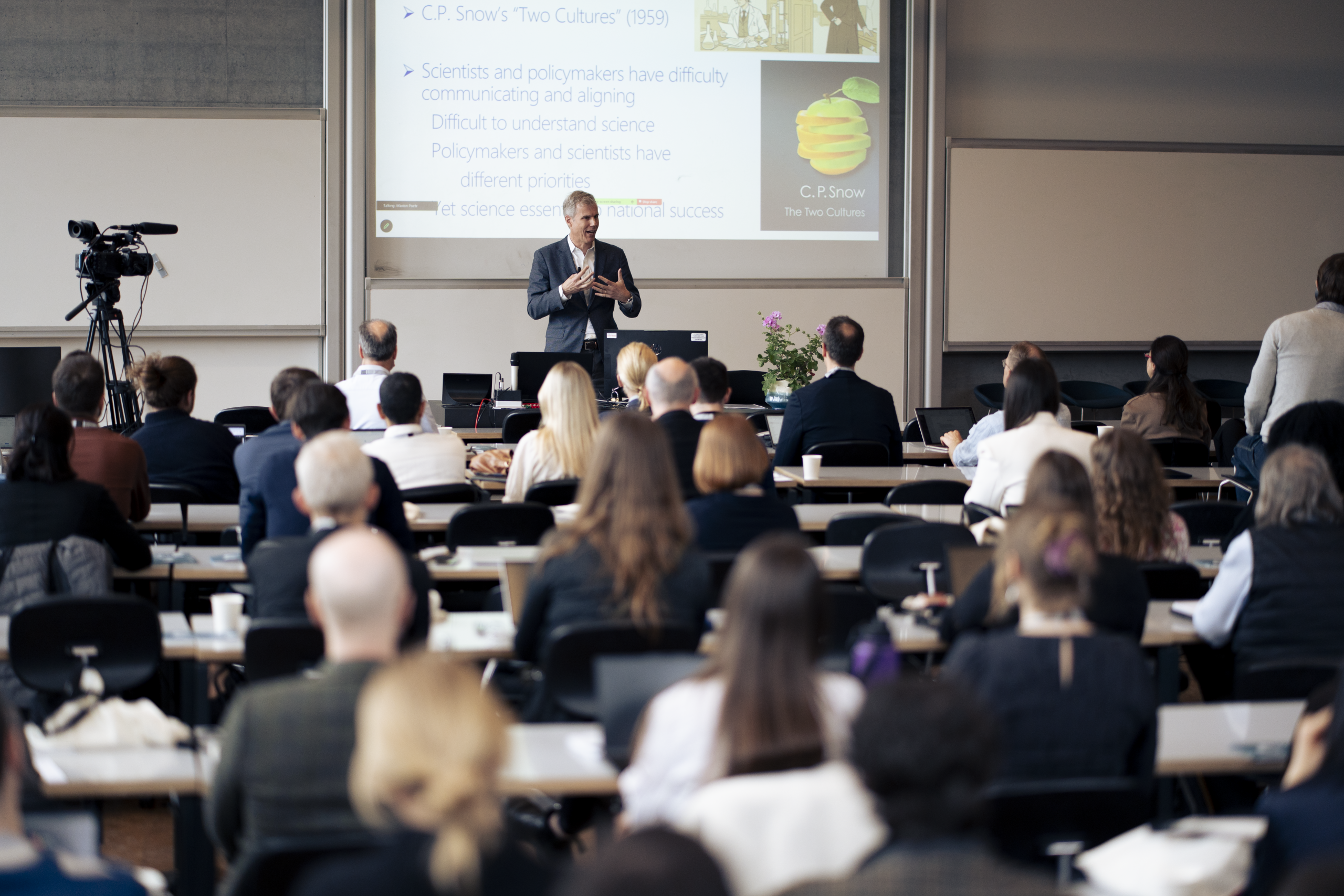
The conference opened with a Keynote by Ben Jones, Professor at the Kellogg School of Management at Northwestern University (USA). To start his discussion of the relationships between science and policy, he highlighted that science and policy clearly need each other: Science is a public good and needs public funding to succeed; government, in turn, needs science to help raise the standard of living but also support national advantage and national security (a topic that has become increasingly salient in recent years). Yet, there are also tensions and misalignments between the “two cultures”: Scientists and policy makers often have difficulty communicating, and the priorities of governments do not always align with those of individual scientists or scientific communities.
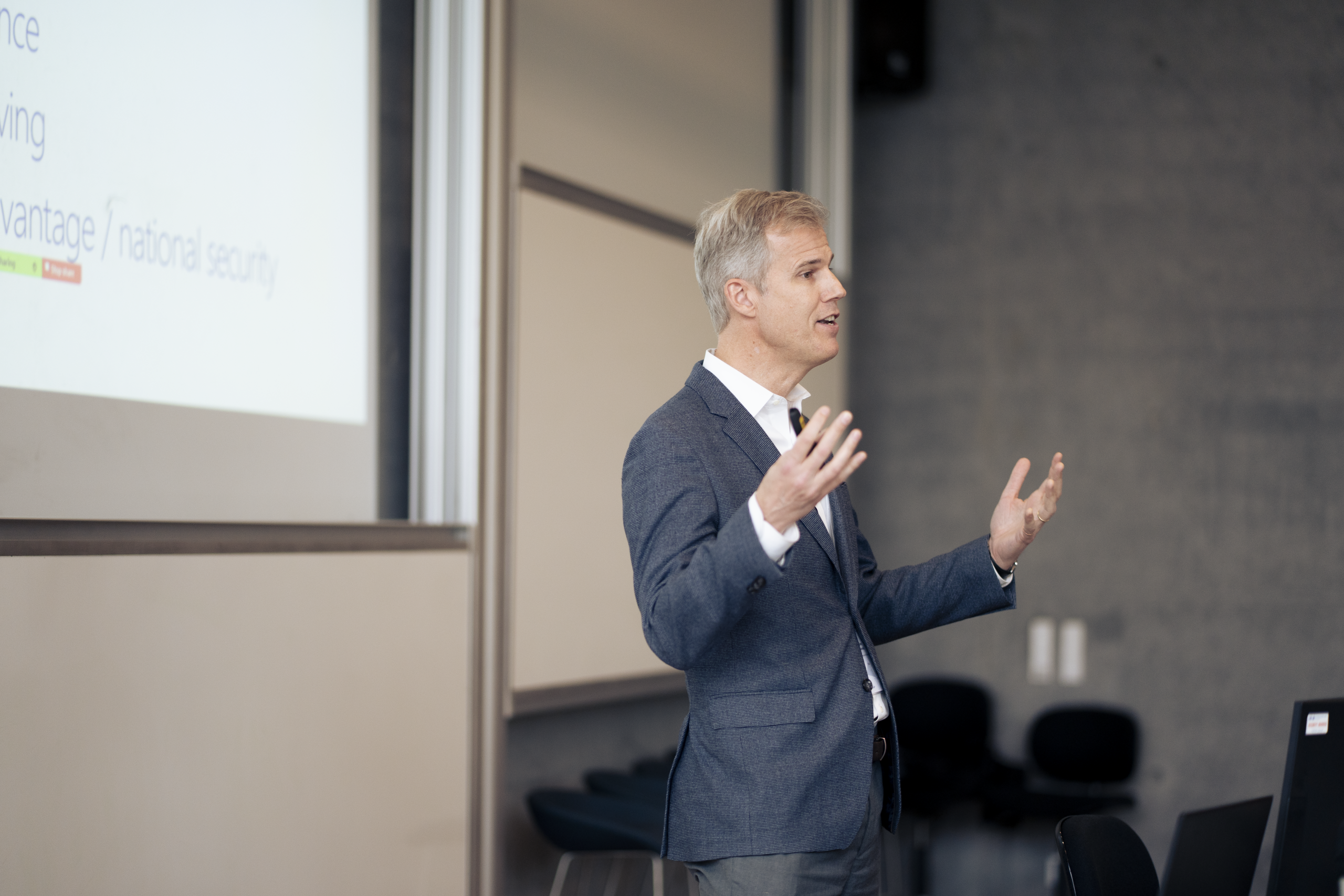
Indeed, Ben traced conflicts back to one of the most fundamental norms of science: The Mertonian norm of “openness” stipulates that knowledge generated is shared openly with the scientific community, regardless of disciplinary or national boundaries. Yet, this openness conflicts with an increasing focus on national competitive advantage in technology and science. Significant U.S. budget cuts to agencies that support especially open kinds of science (vs. military oriented) as well as declining co-authorships between U.S. and Chinese scholars are just some data points that may reflect this increasing tension.
What is lost if openness is reduced? Ben reminded us that openness is important to maximize the “spillovers” that science can generate – benefits of a particular piece of knowledge that occur in other areas and that are often difficult to predict. These spillovers are also essential when it comes to the paths that basic knowledge has to travel to reach applied R&D and have societal impact. Of course, policy makers concerned about national advantage may not care much about – and even dislike – spillovers that ultimately benefit other countries. In that context, new results by Gilani and Jones (work in progress) suggest close attention to the fact that the benefits of science can be both local and global: They show that while paper-to-paper knowledge flows often occur globally, spillovers become more local as we move towards the applied end of the spectrum (e.g., patents, startups).
Ben also discussed the second important aspect of OIS: Collaboration. Building on his seminal work on teams as a solution to the “burden of knowledge” problem, he re-iterated the importance of collaboration to push the scientific frontier. As such, policies that discourage collaboration are problematic. At the same time, the rise of AI raises the question of whether and how AI can foster exploration and enable human scientists to deal with the knowledge burden. Ben sees great benefits for AI to complement (but not necessarily replace) human researchers but then returned to the tension introduced earlier in his talk: AI is often seen as a strategic asset, with governments trying to use it to build competitive advantage using closed approaches (e.g., the U.S. Genesis Mission) rather than an in open science environment.
In closing, Ben shared two competing metaphors for science: In the first one, a society limits openness and collaboration, building a strong castle with a wide moat to protect against outsiders and to keep valuable knowledge inside. In the second one, a team of cyclists is racing towards the horizon, with leaders reducing air resistance for followers – while pedaling even harder to ensure that they are the first to arrive.
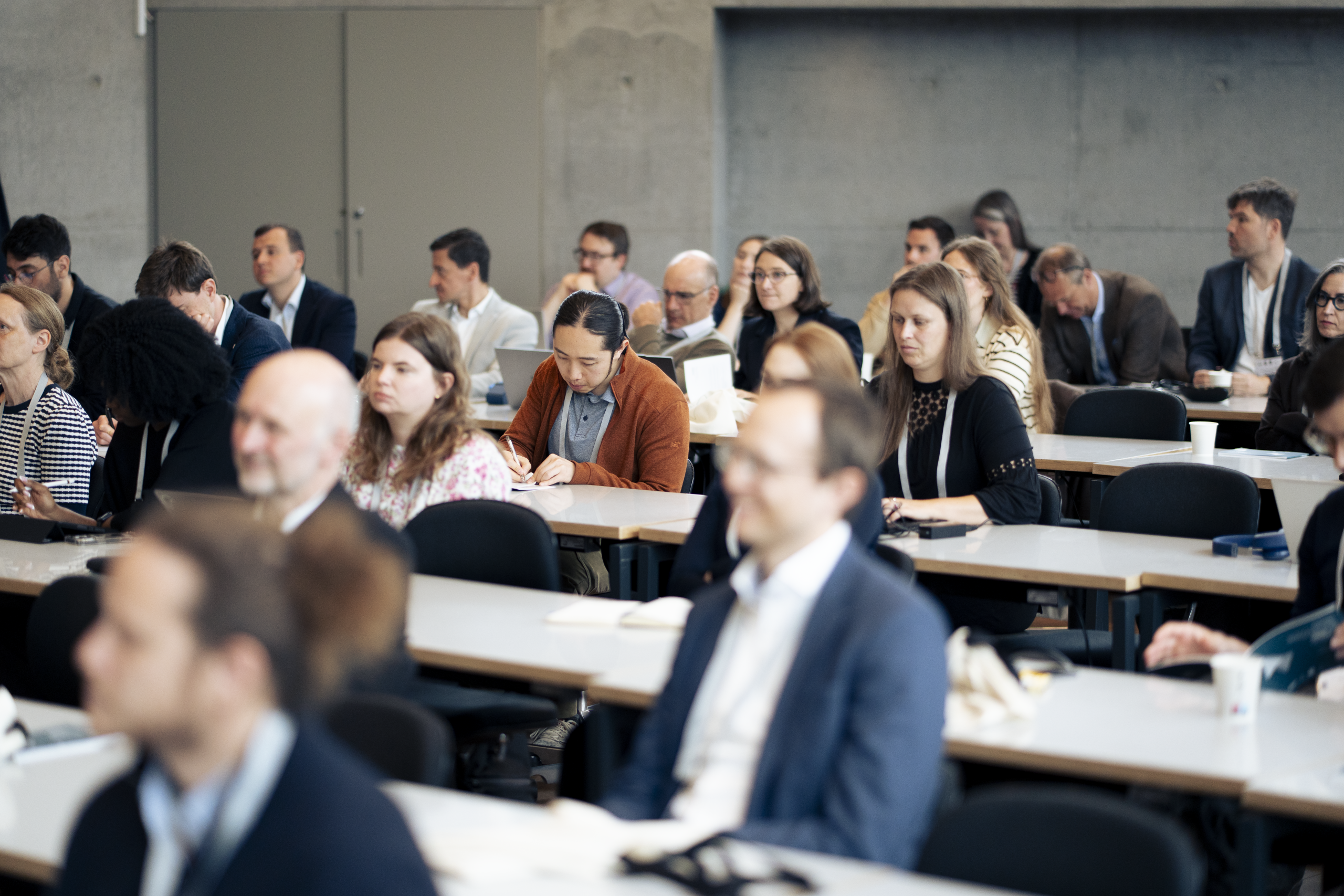
Ben’s remarks spurred many questions in the audience, leading to an engaged discussion around the role of openness and collaborations in today’s policy environment – again reinforcing that the links between science and policy are bidirectional. And although medieval castles are nice to look at, my sense is that the OIS community preferred the image of the intense bike race – as long as there is enough chocolate to burn! 🙂

Contact
Please contact us for any questions or to be added to our conference mailing list, which will ensure that you receive the latest updates about the annual OIS Research Conference.